Cinematography Camera and Lens Master Course

View all courses
  • This course is open for Lifetime Access
  • 35 lesson series
  • Certificate of completion
  • 7 hours, 52 minutes of video

$399.00

JOIN NOW

Real filmmaking. Taught the professional way.

Buying a camera is easy. Learning how to use it like a professional cinematographer is something else entirely.

Today, many tutorials focus on gear reviews, camera settings, and flashy techniques. But professional cinematography is not about gadgets—it’s about understanding lenses, composition, exposure, and the workflow of a professional camera department.

The FilmSkills Cinematography: Camera and Lens Master Course teaches the real procedures and techniques used on professional film and television productions.


Instead of focusing on equipment trends, this course teaches you how cinematographers actually work on set—how shots are prepared, how cameras are operated, and how the camera crew collaborates to capture the director’s vision.

You’ll learn the roles and responsibilities of the professional camera department, including the Director of Photography, camera operator, and assistant camera team. Understanding how these roles work together is essential for anyone who wants to operate professionally behind the camera.

You’ll also learn how to truly master the lens—one of the most powerful storytelling tools in filmmaking. From focal length and perspective to depth of field and composition, you’ll see how cinematographers shape the audience’s experience through the camera.

Inside this course, you’ll learn how to:

  • Prepare and build a professional camera package
  • Set up and operate cameras properly on set
  • Choose and use lenses for storytelling and visual impact
  • Control exposure using professional cinematography techniques
  • Frame and compose cinematic images
  • Understand depth of field and perspective
  • Manage media and protect footage during production
  • Work efficiently with a professional camera crew

These are the same procedures and techniques used on movies, television series, documentaries, and commercial productions of every budget level. Whether you’re working on a major studio production with a full camera crew or a small independent project with limited resources, the fundamentals of professional cinematography remain the same. Understanding these workflows allows you to approach every project with the discipline and confidence of a professional—no matter the scale of the production.


Unlike scattered YouTube tutorials that teach isolated tricks or focus on the latest gear, this course shows you the complete workflow of professional cinematography. You’ll see how cinematographers prepare for a shoot, collaborate with directors and crew members, select lenses and camera configurations, and execute shots efficiently on set. Instead of memorizing settings or copying trends, you’ll learn how to make informed creative and technical decisions that support the story and elevate the visual quality of your work.


Learn how cinematographers think, plan, and solve problems during production


The course is taught by Academy Award and Emmy-winning cinematographers and filmmakers who share the knowledge they’ve gained from years of working on professional productions. They don’t just demonstrate techniques—they explain how cinematographers think, plan, and solve problems during production, from adapting to changing lighting conditions to coordinating with the camera department and other crew members on set.

If you want your footage to look cinematic—and if you want to truly understand the craft behind the camera—this course will give you the professional foundation every cinematographer needs. You’ll gain the skills, mindset, and practical techniques used by professionals so you can approach every shoot with greater confidence, creativity, and control.

The lessons
  • The Director of Photography

    Learn the duties and responsibilities of the director of photography.
  • Camera Operator

    Learn the duties and responsibilities of the camera operator both on and off the set.
  • 1st Assistant Camera

    Learn the duties and responsibilities of the 1st Assistant Camera.
  • 2nd Assistant Camera

    Learn the duties and responsibilities of the 2nd Assistant Camera on set
  • An Overview of Cinematography

    Learn the basic components of cinematography, the cinematographer's role, and how to work with the director.
  • How a Cinematographer Preps a Project

    Learn how a cinematographer first begins a project, starting with how to read and evaluate the script.
  • Building the Camera Package

    Learn the different components of the camera, accessories, and how to choose the tight combination for your project.
  • How to Prep a Camera

    Drew Lauer, from Hollywood Special Ops, takes us through the process of prepping a camera package for a shoot.
  • How to Test a Lens

    Learn how to test your lens and what problems to look for when preparing your equipment for a shoot.
  • Imaging Sensor and ISO

    Learn how the imaging sensor works and how to use the ISO as an exposure tool.
  • Frame Rates

    Learn about frame rates, how to choose the correct one, and the impact frame rates can have on your image.
  • Tripods and Sliders

    Learn the types of camera support equipment - from tripods to jibs - and how to properly use them.
  • Introduction to Lenses

    Learn about the attributes of the camera lens and how to choose the best lens for your production
  • Taking Care of Lenses

    Learn how to properly handle and care for a camera lens
  • Focusing Techniques

    Learn how to use focus tools - including the measuring technique, peaking, and 1:1 zoom to keep your shot in sharp focus
  • How to Expose a Shot

    From zebra strips and light meters to false color and waveform monitors, learn how to use these tools to get the perfect exposure.
  • The Art of Exposure

    We think of exposure as simply opening and closing the aperture, but it's really the balance of five settings, each of which alter the look of the shot.
  • F-stops and T-Stops

    Learn how f-stops and t-stops work, and how to use them as a measure of exposure.
  • Neutral Density Filters

    Learn how to use neutral density filters to control the exposure of your shot.
  • Polarizers

    Learn how to use polarizers to enhance the look of your footage.
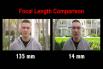
  • Lens Focal Length

    Learn how the focal length of a lens affects the look of the shot.
  • Depth of Field

    Learn how to control the depth of field, the physics behind it, and how to use it as a creative tool to invoke emotion in a shot.
  • The Camera Shutter

    Learn how the camera shutter works, its limitations, and how you can use use it to change the look of your footage.
  • Managing Media

    Today's filmmakers almost always shoot on a digital format, and that makes digital media the new film negative. Learn how to properly manage your on-set media.
  • Composing the Shot

    Learn story-driven composition, techniques to create a compelling frame, and how working Hollywood directors approach cinematic composition.
  • Creating Depth on Screen

    Learn techniques for crafting foreground, midground, and background elements, how to manage depth or flatness as a narrative tool, techniques used in network television shows to cheat depth, and the ways the camera lens can affect depth.
  • Shot Types and Camera Movements

    Learn the intricacies of framing, the basic shot types, advanced variations on these shot types, how to quickly communicate your vision to the cinematographer, and the emotional responsive invoked by various shot types.
  • Head Room and Lead Room

    Learn compositional techniques of headroom and lead room, technical considerations, the emotional impact of framing on the shot, short siding, and establishing continuity in reverse shots.
  • Eyelines

    Learn how to choose the best eye line, directing techniques for ideal camera placement, how to overcome challenges when working with visual effects, and how to fine tune actor's eyelines within mere inches to achieve the desired emotional impact.
  • Singles and Over-the-Shoulder Shots

    Learn compositional techniques for framing actors in a dialogue scene, and how each choice affects the subtext and emotional undertone of the scene.
  • Screen Division and the Rule of Thirds

    Learn how to apply the concept of screen division and the Rule of Thirds to improve the composition of your shots
  • Screen Direction and the Rule of 180

    Learn the core fundamentals of screen direction, how to establish the line of action, the rule of 180, exceptions to the rule of 180, instances where the line of action doesn't apply, how to shoot multiple character with an ever-moving line of action.
  • The Technical Frame

    Identify and work with different aspect ratios, manage conversions, safe framing requirements, and how various aspect ratios are adjusted for different exhibition and broadcast formats.
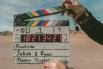
  • Using a Clapboard

    Learn how to properly use one of the most iconic tools in the film industry.
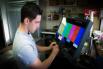
  • Using a Monitor

    Production monitors are used on practically every set.  In this module you will learn how to properly calibrate a production monitor to ensure that the image you see on screen is what is actually being recorded.